Market Analyses
The basis for your strategic decisions
Markets are changing faster than ever. Technological advances, political shifts, resource constraints, and unexpected events can alter market conditions within a short period of time. This makes up-to-date, reliable market data and a solid understanding of relevant market developments increasingly important. Especially when entering new markets, a market analysis provides the basis for identifying market potential, opportunities, and risks at an early stage and making well-founded decisions.
Let’s uncover the opportunities in your market.
Are you planning to enter a new market, identify alternative application areas, or assess the potential of a new business field?
We analyze market structures, relevant players, the competitive environment, and growth potential. We consolidate and validate fragmented information to develop robust market potential analyses and derive actionable recommendations. This provides you with a reliable basis for assessing market opportunities, identifying them at an early stage, and making strategic decisions.
Which Decisions Does a Market Analysis Support?
Market analyses provide a reliable information base for strategic decision-making. They help companies assess markets realistically, evaluate opportunities and risks, and prioritize relevant courses of action. What matters is not the volume of data, but the quality and relevance of the information for the specific business decision.

Is entering a new market worthwhile?
Market potential, demand, competition, and barriers to entry reveal how attractive a market really is.

Which markets offer the greatest potential?
Countries, industries, and application areas are compared based on relevant market and company-specific factors.

Which customer groups are relevant?
Target groups are assessed and prioritized based on their needs, market potential, and strategic relevance.

How large is the addressable market?
Market size, growth, and achievable potential are derived transparently and validated for plausibility.

How is the competitive landscape structured?
Relevant competitors, market positions, and competitive dynamics are analyzed and assessed.

What opportunities and risks exist?
Market developments, regulatory factors, and other relevant influences are taken into account in the assessment.

The Right Analysis for You
Two missions, one goal: Making the right decision.
High-Level Market Analysis
Your need: You’re planning to identify new application areas or country markets. A high-level market analysis starts with identifying the target market, relevant trends, competitors, and customer needs to gain a fundamental understanding of the market structure.
Based on the high-level market analysis, you can determine which application area or country market is relevant to you.
Sample Results
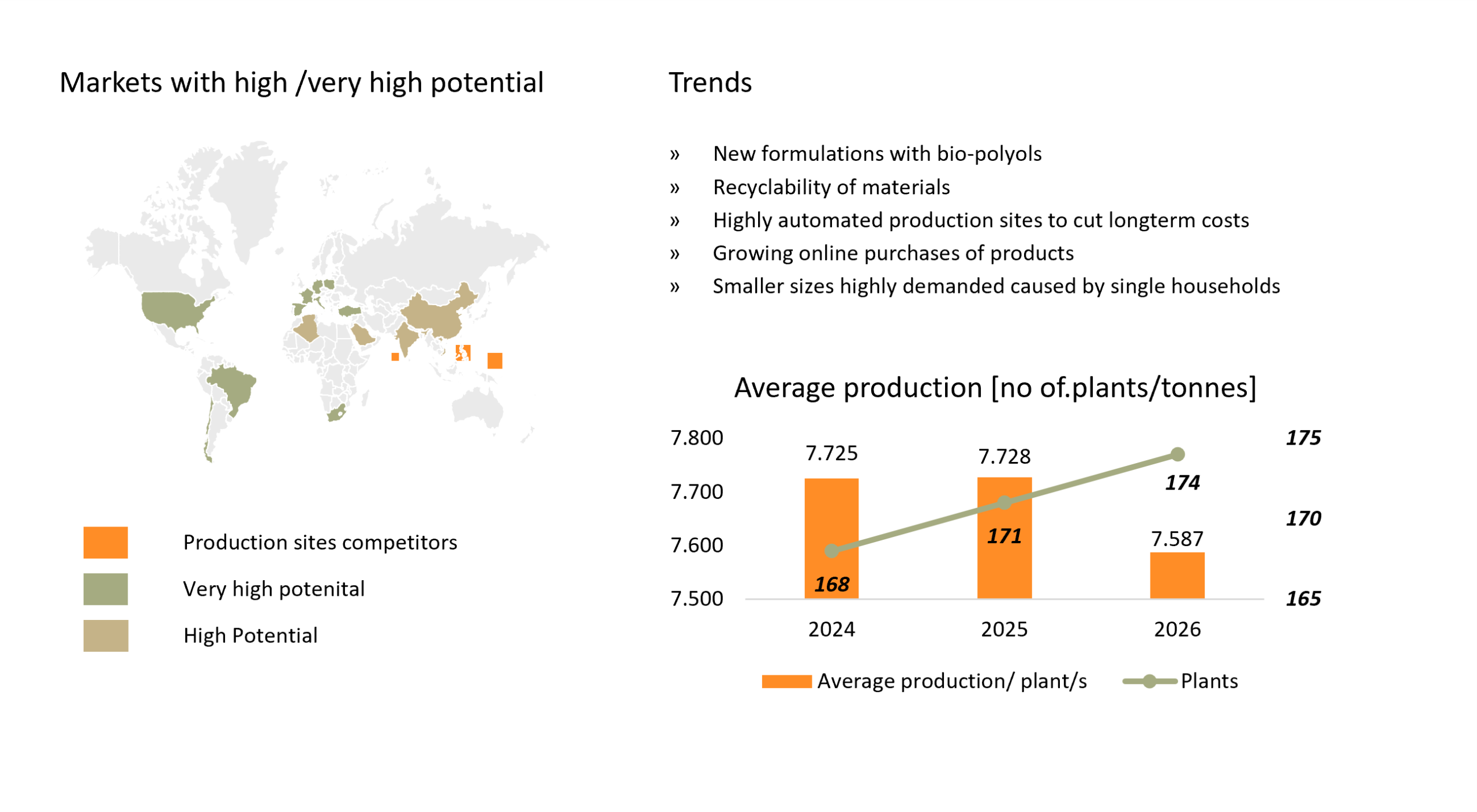
Source: SVP Expert Interviews, SVP-Research & different Databases
Objective: Compare markets, regions, or application areas and prioritize the options with the greatest potential for in-depth analysis.
Deep-Dive Market Analysis
Your need: You want to be well-prepared when entering a new application area or country market. In a deep-dive analysis, key figures such as market size, growth potential, distribution structures, and market entry barriers are thoroughly analyzed.
Based on the deep-dive market analysis, you can strategically assess the opportunities and risks of entering a new market.
Sample Results
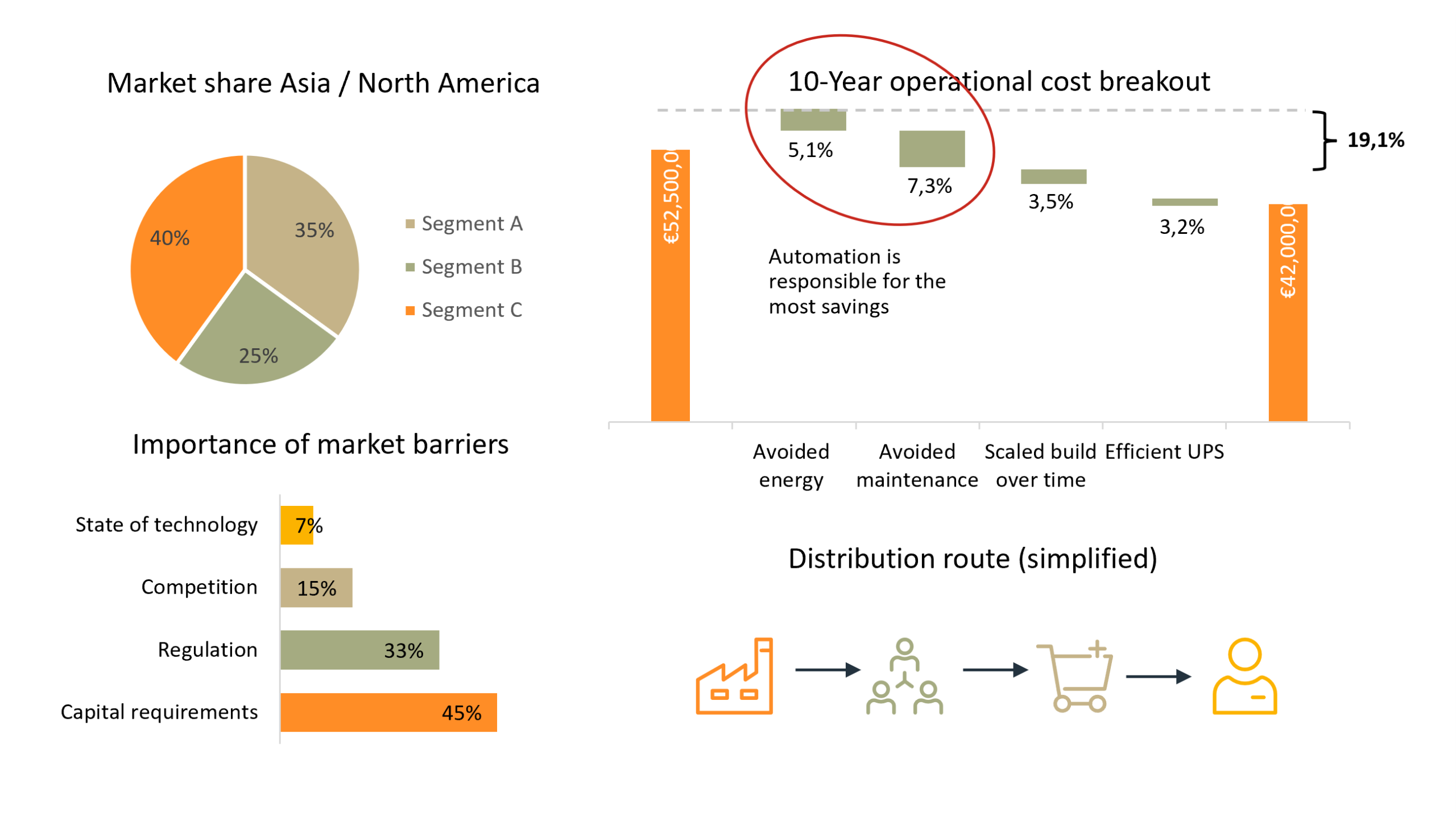
Source: SVP Expert Interviews, SVP-Research & different Databases
Objective: Evaluate the opportunities, risks, and market potential of a selected target market in sufficient detail to prepare the ground for a concrete strategic decision.
What do We Analyze in a Market Analysis?
The exact scope depends on your specific requirements. Typically, we analyze five key dimensions of a market. The result: you gain not only an overview of the market as a whole, but also an assessment of market opportunities based on your company’s specific situation.
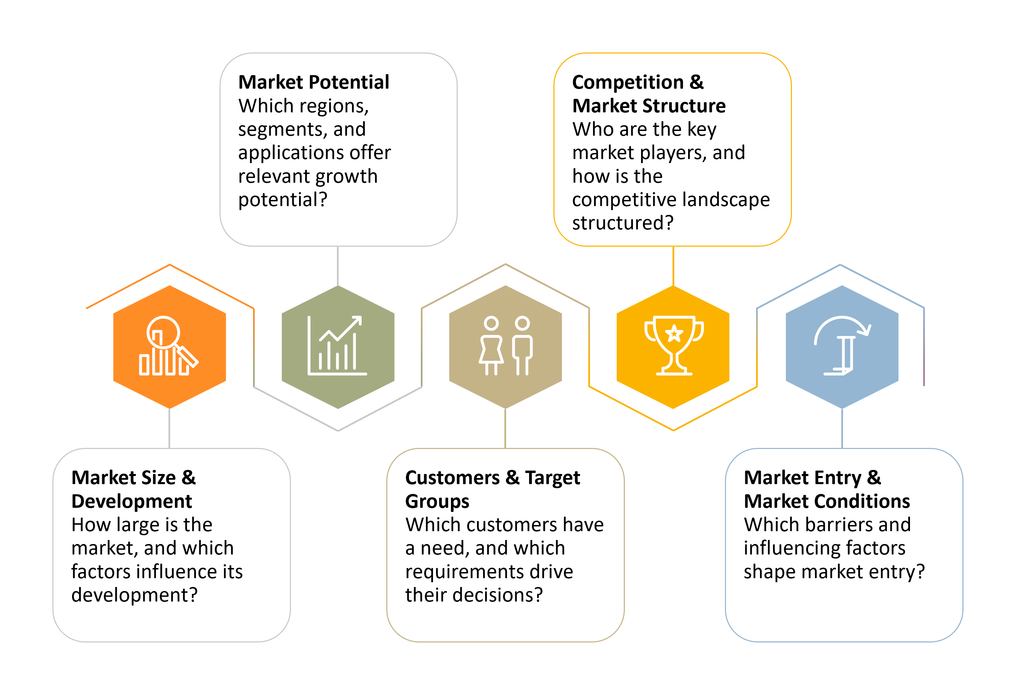
How is a Reliable Market Analysis Developed?
A reliable market analysis is developed through a structured process – from a clear market definition and data validation to the assessment of the results. The result is a transparent market picture in which data, assumptions, and calculations are reviewed and validated from different perspectives.
- Define the market and research question: Which decision needs to be supported? Products, regions, customer groups, and application areas are clearly defined.
- Research and evaluate data: Using AI tools, we assess statistics, industry information, innovations, startup landscapes, technology developments, and other relevant sources. Experienced B2B industry experts then review and evaluate the findings.
- Validate market assumptions: Interviews with market participants and industry experts complement available information and help verify key market assumptions.
- Develop market models: Top-down and bottom-up approaches are used to derive market sizes and validate results through different calculation methods.
- Assess the results: The findings are evaluated in the context of your specific business question and translated into market potential, opportunities, risks, and possible next steps.
What do You Receive from a Market Analysis?
The results are always tailored to your specific question, business context, and strategic objectives. We evaluate primary data, industry association information, innovative technologies, and relevant B2B market data, with a particular focus on specific application markets when analyzing niche markets. The result is a structured basis for decision-making that helps you assess and enter new markets, alternative application areas, or additional countries.
Understand the Market:
- Market definition & segmentation
- Market size & growth forecast
- Market potential, TAM, SAM & SOM
- Target groups & customer structures
- Competitive landscape
Prepare Strategic Decisions:
- Trends & influencing factors
- Market entry barriers
- Opportunity & risk assessment
- Prioritization of markets or application areas
- Actionable recommendations & strategic consulting
Benefits of Market Analysis
Reliable market decisions require more than individual key figures or publicly available information. What matters is assessing market size, market potential, competition, customers, and relevant developments in the right context and translating these insights into clear strategic conclusions.
SVP helps companies create transparency in complex B2B and niche markets and prepares decision-relevant information in a targeted manner. Drawing on many years of experience, in-depth industry expertise, and market analyses tailored to the specific business question, we provide reliable insights for market entry, growth, new business opportunities, and strategic market development. A market analysis with SVP provides benefits across six key areas:
From Insight to Implementation
Upon request, we also support you beyond the market analysis by prioritizing strategic options, conducting further market assessments, and continuously monitoring relevant market developments.
FAQ
A market analysis systematically examines the structure, size, development, and dynamics of a market. Its purpose is to create transparency about market volume, growth rates, demand structures, trends, and regulatory or economic conditions. The analysis provides an analytical foundation for strategic decisions, for example when evaluating market potential, prioritizing business fields, or identifying growth opportunities.
A market analysis helps determine the attractiveness of a market. It provides insights into whether future market growth can be expected, how intense competition is, and which target groups or regions offer relevant market potential. Since trends, regulations, economic conditions, and technological developments can vary significantly between regions, a reliable and comprehensive database is essential for a meaningful market analysis.
Market analyses rely on statistical data from primary sources, specialized databases, industry reports, and publications from trade associations, as well as findings from expert interviews. These sources are analyzed, consolidated, and critically evaluated to create a reliable market overview. In many B2B sectors, analysts also develop market models to estimate market potential or generate forecasts. This is often necessary because B2B markets frequently consist of highly specialized niches with limited publicly available data.
Secondary research enables a comprehensive and comparable view of markets across different regions and time periods without requiring extensive primary data collection. The method of desk research allows analysts to efficiently gather and analyze relevant information from a wide range of sources. By combining different data sources and analytical approaches, it is possible to generate robust and well-founded insights for strategic decision-making. When using AI-supported tools, industry expertise and analytical experience remain essential to properly validate and interpret the results.
Market analysis focuses on the overall market, its structure, and its development. Competitive analysis, in contrast, examines individual market participants, their strategies, positioning, and product offerings. Both approaches complement each other. In many cases, conducting a market analysis without a competitive analysis provides only limited insight. Competitive analysis often contributes to defining the market, estimating market size through bottom-up approaches based on company revenues, and understanding the overall industry structure. For this reason, competitive analysis is frequently used as a foundation for a broader market analysis.
Market analyses support strategic decisions such as market entry, identifying new applications for existing products, evaluating investment opportunities, and shaping portfolio or innovation strategies. More than ever, companies must ensure that their business models remain competitive over the long term. Disruptive technologies such as artificial intelligence or increasing competition from new international market players can significantly change market dynamics. Market studies provide a solid data foundation to objectively assess opportunities and risks and to support strategic decision-making.
The reliability of a market analysis depends largely on the quality, relevance, and combination of the underlying data sources. Equally important is the expertise of analysts in interpreting industry developments and evaluating the credibility of information. By cross-checking multiple independent sources and applying critical analytical assessment, it is possible to derive reliable insights even in dynamic or fragmented markets. In addition, market analyses should always be tailored to the specific objectives of the client and the characteristics of the target market. Especially in niche markets, careful validation of available information is essential.
Outsourcing a market analysis can be beneficial when internal resources are limited or when an independent external perspective is required to validate existing assumptions. External support can also be valuable when additional data sources, methodologies, or international expertise are needed, or when analyzing markets and technologies that are unfamiliar to the organization. It is particularly useful when internal teams have limited experience with strategic market analysis or AI-supported research tools. Since market analyses often form the basis for high-impact strategic decisions and major investments, involving experienced Market Intelligence specialists with strong methodological expertise can provide significant value.