Planning a successful Market Entry
Why Reliable Market Data Determines Success
A new market offers growth potential, access to new customer groups, and additional revenue opportunities. At the same time, entering a new market is one of the strategic decisions associated with the greatest uncertainties. Whether expanding into a new country, entering a new industry, or launching an innovative product, every decision is based on assumptions about markets, customers, and competition.
This is precisely where the risk lies.
Many companies invest considerable resources in their market entry strategy. Nevertheless, key decisions are often based on insufficiently validated insights or experiences from their home market. The consequences often become apparent only after market entry—when necessary adjustments become significantly more complex and costly.
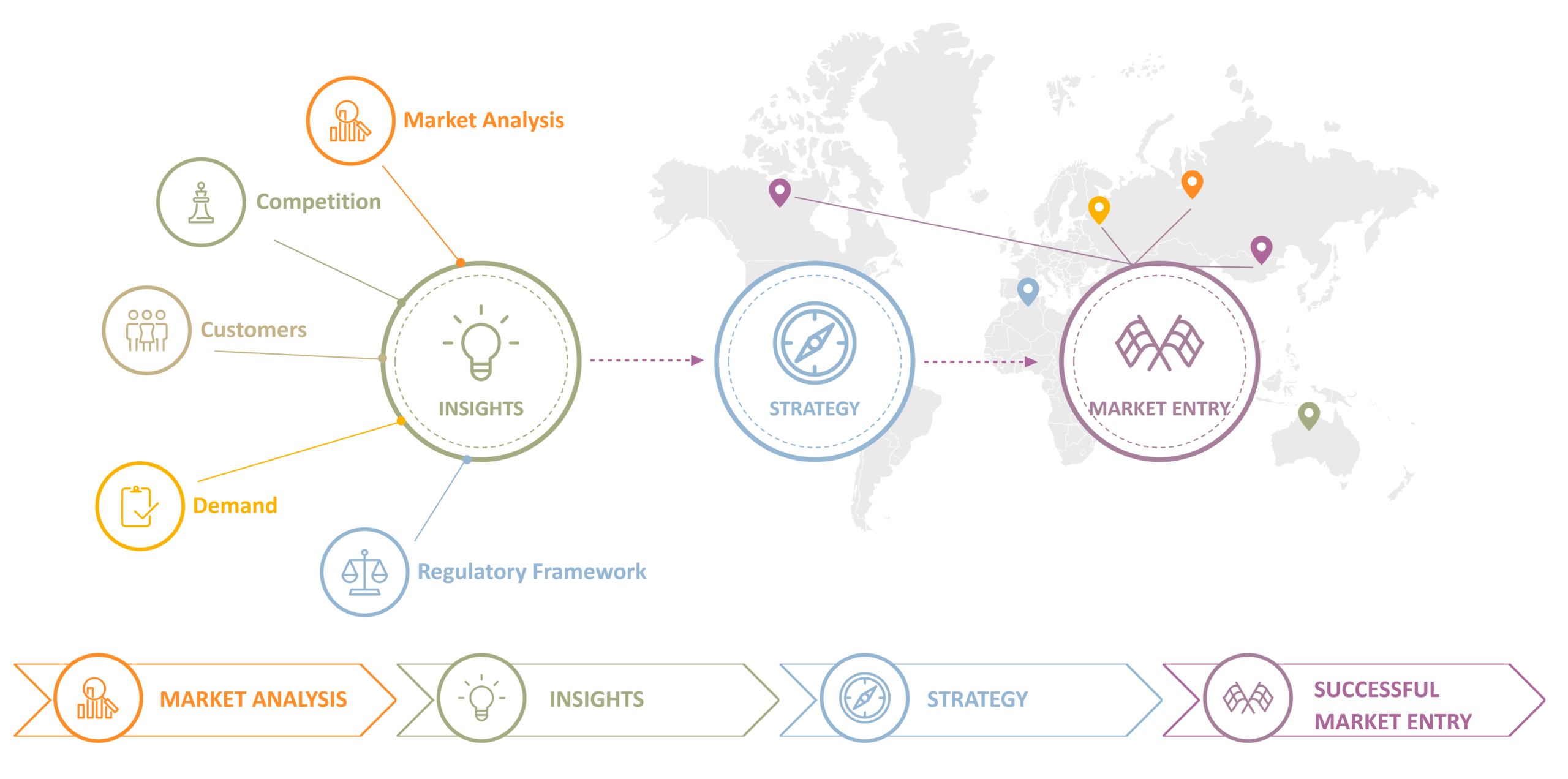
A successful market entry therefore does not begin with sales or marketing activities, but with a comprehensive market analysis and meaningful insights into the target market.
Why Market Entries Fail
There is rarely a single reason for a failed market entry. In most cases, several factors interact simultaneously. The most common reasons include:
- Overestimating market potential
- Incomplete competitive analyses
- Confusing customer needs with actual demand
- Underestimating regulatory requirements
- Lack of knowledge about local market structures and distribution channels
The good news: many of these risks can be identified before entering the market—provided that strategic decisions are based on data-driven market intelligence rather than assumptions.
1. Evaluate Market Opportunities Realistically
A large market is not automatically an attractive target market. While market size and growth rates provide initial indicators, they do not answer the key question of whether a company can actually succeed in that market.
A realistic assessment must consider additional factors, including competitive intensity, existing barriers to entry, regulatory requirements, accessibility of relevant target groups, and the degree to which the company’s offering aligns with the needs of the target market.
Equally critical is the assumption that a business model successful in the home market can be transferred to other markets without major adaptations. Purchasing behavior, pricing structures, decision-making processes, and cultural expectations often differ significantly. Therefore, market potential assessments should always combine quantitative market data with qualitative insights from customer and expert interviews.
2. Conduct a Comprehensive Competitive Analysis
Many companies focus their competitive analysis exclusively on established market leaders or direct competitors. This often results in an incomplete picture of the actual competitive landscape.
In many industries, new risks arise from specialized niche players, digital business models, innovative technologies, or alternative solutions that gradually replace existing products and services. Companies that fail to consider these developments often underestimate market dynamics and overestimate their own differentiation.
A thorough competitive analysis therefore answers more than just the question of who the competitors are today. It also identifies future market developments that may influence business success and highlights competitors or technologies that should be monitored proactively.
3. Distinguish Between Need and Actual Demand
Identifying a customer problem does not automatically mean that a viable market exists. Many companies focus on proving that a need exists. However, market success ultimately depends on whether customers are willing to replace their current solution, initiate internal decision-making processes, and pay for the perceived value.
Particularly in B2B environments, budget responsibility, investment cycles, procurement processes, and internal risk assessments often influence purchasing decisions more strongly than interest in a new solution.
Therefore, companies should not only analyze customer needs but also validate actual demand. Insights into willingness to pay, the priority of the problem, and potential purchasing barriers provide far more reliable information than secondary data or internal assumptions alone.
4. Consider Regulatory and Operational Requirements Early
Even when market attractiveness, competition, and demand appear favorable, regulatory requirements and operational conditions can significantly complicate market entry.
Depending on the target market, approvals, certifications, product standards, data protection regulations, import requirements, and tax regulations can vary considerably. In addition, requirements related to logistics, service provision, sales partners, or local value creation should be considered at an early stage of planning.
Companies that evaluate these aspects only shortly before market entry risk delays, additional investments, or extensive changes to their market entry strategy. Early assessment provides planning certainty and reduces costly surprises.
Successful Market Entry

Market Analysis
Competitive
Research
Customer
Insights
Validate Demand
Market Entry Framework
Strategy Execution
Market Intelligence Creates Reliable Decision-Making Foundations
Successful market entries are rarely based on intuition. They are built on systematically collected and validated data.
Market Intelligence combines market analysis, competitive analysis, customer and expert interviews, and the assessment of technological and regulatory developments into a robust decision-making framework. This enables companies to gain a more realistic understanding of opportunities and risks while prioritizing investments more effectively.
Especially in dynamic markets, a comprehensive information base significantly improves the quality of strategic decisions. Risks can be identified earlier, market opportunities can be assessed more accurately, and necessary adjustments to the market entry strategy can be made before the actual market launch.
Conclusion
A successful market entry begins long before the first sales activity. The key is to consistently challenge assumptions and base strategic decisions on data-driven insights.
Companies that realistically assess growth opportunities, thoroughly analyze the competitive environment, validate actual demand, and take regulatory requirements into account at an early stage create the foundation for sustainable market success. SVP supports companies with comprehensive Market Intelligence solutions — from analyzing new markets and competitive landscapes to understanding customer needs, validating market potential, and enabling data-driven decisions for successful market entry and expansion.
SVP Recommendation
Before investing in a new market, companies should answer the following questions:
- Is the target market truly attractive for our business model?
- Which customer groups offer the greatest market opportunities?
- Which direct and indirect competitors are active in the market environment?
- Which regulatory requirements must be met?
- Which sales channels are most effective for reaching potential customers?
- What adaptations are necessary to successfully position our offering in the target market?
Only when these questions have been answered on the basis of reliable market analyses can a solid strategic foundation for successful market entry be established.
FAQ
What are the key components of a successful market entry strategy?
A successful market entry strategy is based on a thorough market analysis. This includes assessing market potential, analyzing competitors, identifying relevant target groups, validating demand, and considering regulatory and operational requirements. Only on this basis can effective sales, pricing, and market development strategies be designed.
Why is market analysis important before entering a new market?
A market analysis helps companies realistically assess the opportunities and risks of a target market. It provides insights into market potential, customer needs, competitors, and barriers to entry, thereby creating a solid foundation for strategic decision-making.
What insights does a competitive analysis provide?
A competitive analysis identifies which companies are active in the target market, how they are positioned, and which products or services they offer. It also provides insights into pricing strategies, distribution channels, unique selling propositions, as well as potential new competitors and alternative solutions.
How can the market potential of a new market be assessed realistically?
In addition to market size and growth rates, companies should consider competitive intensity, target groups, willingness to pay, regulatory requirements, and the fit between the market’s needs and their own offering. Combining quantitative market data with qualitative insights enables a much more accurate assessment.
How does Market Intelligence support market entry?
Market Intelligence consolidates data from market and competitive analyses, customer and expert interviews, and the monitoring of technological and regulatory developments. This provides companies with a data-driven foundation for identifying opportunities and risks early and aligning their market entry strategy accordingly.
Quelle: SVP-Research